Brand Style System Study: How Much Heading Density Is Too Much?
A content-design perspective on heading density, showing when extra subheads improve scanability and when they fragment the reading rhythm.
- Compared heading cadence patterns used in editorial, product marketing, and documentation layouts.
- Outlined how density thresholds affect scan speed and perceived polish in branded long-form pages.
On this page
Heading systems are often overengineered in brand guidelines because they are easier to standardize than good writing. The result is a page filled with subheads, eyebrow labels, kicker lines, and metadata blocks that compete for attention before the body copy has a chance to lead.
What heading density actually controls
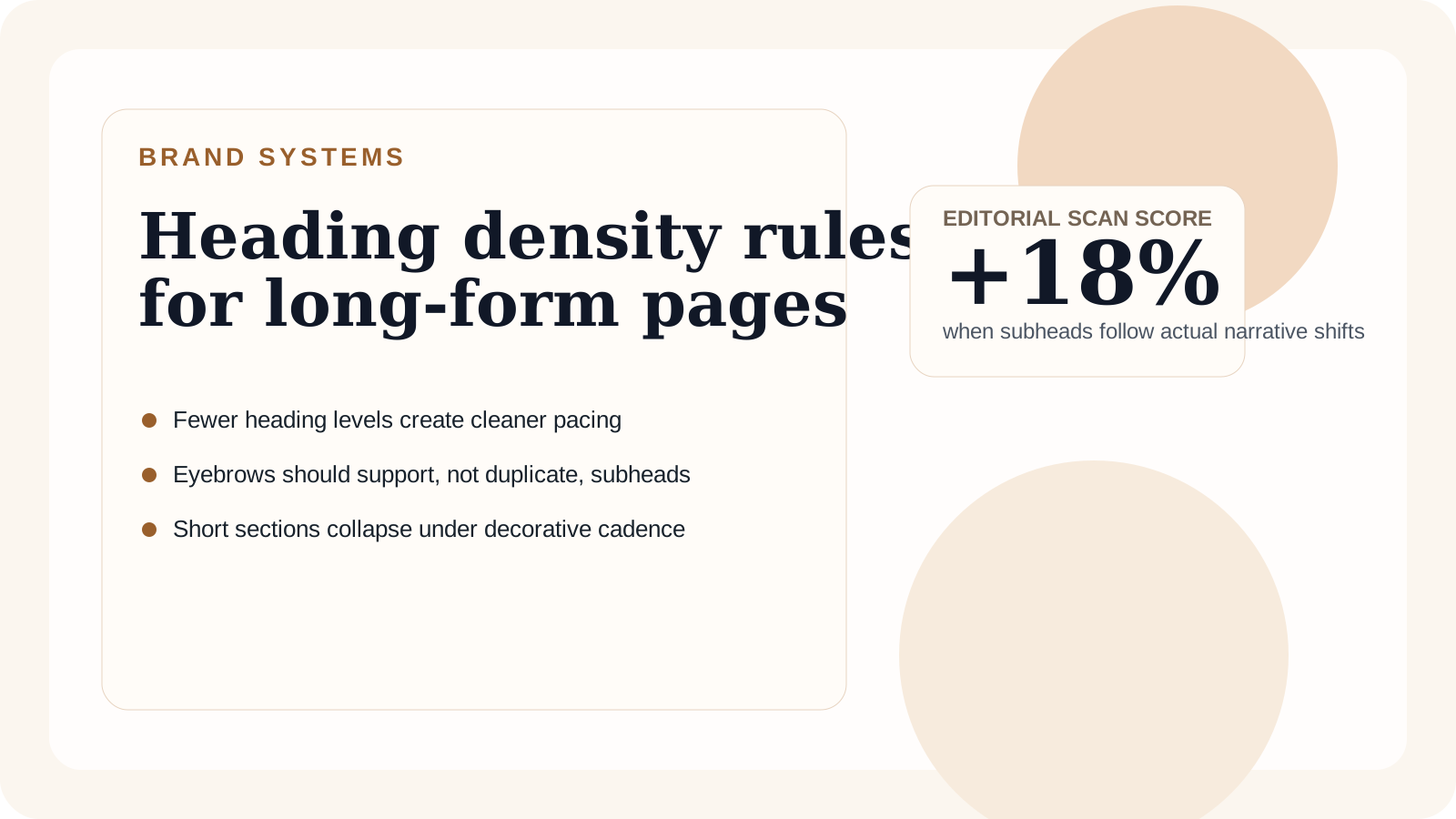
Heading density influences pacing. A denser system can make a long page feel structured and scannable, especially in docs or B2B marketing pages with multiple proof sections. But once the cadence becomes too frequent, readers stop interpreting headings as signposts and start seeing them as repetitive decoration.
The break point is usually visible in sections shorter than three body paragraphs. If each short idea receives its own heading and eyebrow, the page gains visual noise instead of clarity. Readers keep reorienting rather than flowing through the narrative.
Density patterns by page type
| Page type | Recommended cadence | Why it works | Failure mode |
|---|---|---|---|
| Documentation article | Heading every 2-4 paragraphs | Supports lookup behavior | Endless micro-sections that feel fragmented |
| Editorial feature | Heading every 4-6 paragraphs | Preserves narrative flow | Readers lose their place between decorative labels |
| Product landing page | Heading per module | Works with modular scanning | Too many heading levels within one module |
| Case study | Heading per proof block | Keeps evidence distinct | Metrics become louder than the story |
The core principle is that heading rhythm should follow the job of the page, not the number of available tokens in the brand kit.
A better governance rule
Instead of documenting five heading levels and encouraging teams to use all of them, define a default narrative rhythm. For example: one primary heading, one supportive eyebrow style, and one subsection style for long pages. Everything else becomes an exception that must justify itself through content structure.
This approach also simplifies component libraries. Designers stop inventing new combinations for every campaign, and writers gain a clearer sense of when a section deserves its own headline. The page becomes easier to scan because the heading pattern is consistent rather than ornamental.
Recommendation
Use heading density as a pacing tool, not a branding opportunity. If a page feels busy, reduce the number of heading changes before redesigning the entire layout. In most cases, fewer but stronger headings create a more premium reading experience than an overlayered token stack.
For teams actively refactoring their systems, typography hierarchy provides the more general structure rules that should come before fine-grained brand styling.