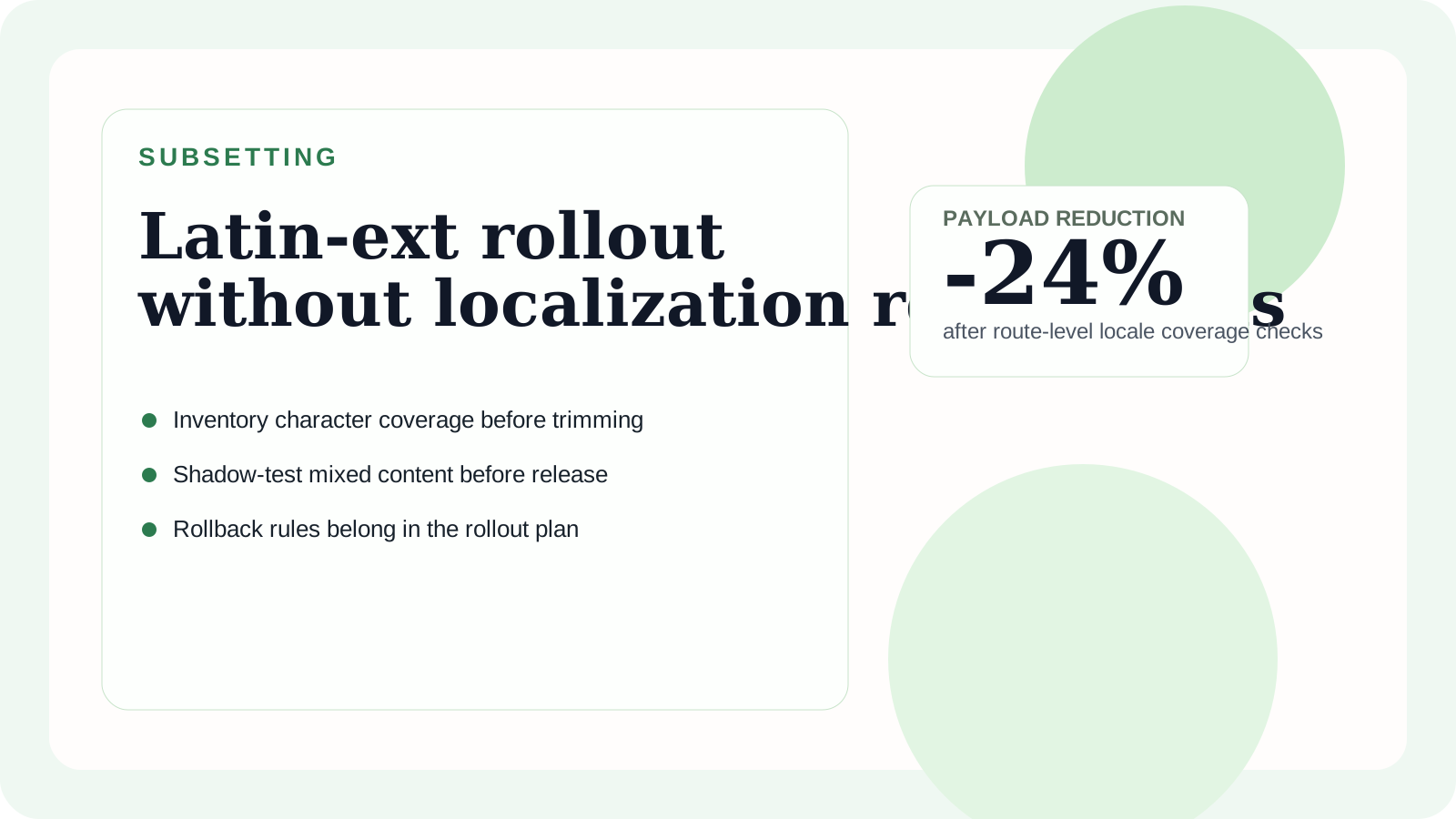
Performance Rollout: Subsetting Latin-Ext Fonts Without Breaking Localization
A rollout framework for Unicode-range subsetting that cuts payload without quietly degrading coverage for localized product surfaces.
- Outlined a rollout sequence for Latin-ext font subsetting that keeps locale coverage visible during performance work.
- Connected Unicode-range decisions to QA checkpoints in localized interfaces rather than treating subsetting as a build-only optimization.
On this page
Subsetting fonts is one of the fastest ways to recover performance budget, but localization teams often pay the hidden cost later. A Latin-ext rollout only succeeds if the product team knows exactly which locales, fallback chains, and content surfaces are protected before the first file is trimmed.
Start with coverage, not bytes
Before generating subsets, inventory the languages and script ranges used in production, support content, onboarding flows, and transactional email previews. Teams often scope only the main app and forget that localized legal text, invoice PDFs, or embedded knowledge-base modules still depend on the broader character set.
Once that inventory exists, define which routes can safely use a narrower Latin subset and which require Latin-ext or full fallback support. This avoids the common mistake of rolling out a universal optimization to a product with uneven locale requirements.
Safer rollout sequence
| Phase | Goal | Success condition |
|---|---|---|
| Audit | Identify actual character coverage needs | Locale inventory is complete |
| Generate subsets | Produce Latin and Latin-ext assets | Files map cleanly to intended routes |
| Shadow test | Compare fallback behavior in staging | No missing glyphs in critical flows |
| Controlled release | Launch on low-risk routes first | Performance improves without support tickets |
The shadow test phase is the one teams skip most often. It is also the phase that prevents embarrassing glyph regressions in billing, profile data, and user-generated content.
What to verify in QA
Test tables, search, profile forms, exported receipts, and system-generated names. These areas mix unpredictable content with tight layouts, which is exactly where fallback issues become visible. Also verify that the CSS and preload strategy do not accidentally fetch both subsets when only one should load.
A good rollout includes explicit rollback conditions. If missing characters appear in a critical workflow, the team should know whether to expand coverage for a route, adjust locale detection, or revert the subset entirely.
Recommendation
Treat subsetting as a localization project with performance upside, not a pure optimization task. The best rollout protects language coverage first and then narrows file scope only where the evidence is clear. That approach keeps the performance win durable instead of temporary.
If your team is also evaluating mixed-script systems, multilingual CJK + Latin pairing systems is a useful companion because it exposes the UI states most likely to reveal subsetting mistakes.