Performance Deep Dive: CDN vs Self-Hosted Fonts for Modern Web Apps
A practical comparison of CDN-delivered and self-hosted fonts, with guidance on latency, cache control, privacy, and deployment complexity.
- Compared operational tradeoffs between third-party delivery and self-hosted font pipelines from a product engineering perspective.
- Summarized where latency, privacy posture, and cache strategy influence the hosting decision more than raw file size.
On this page
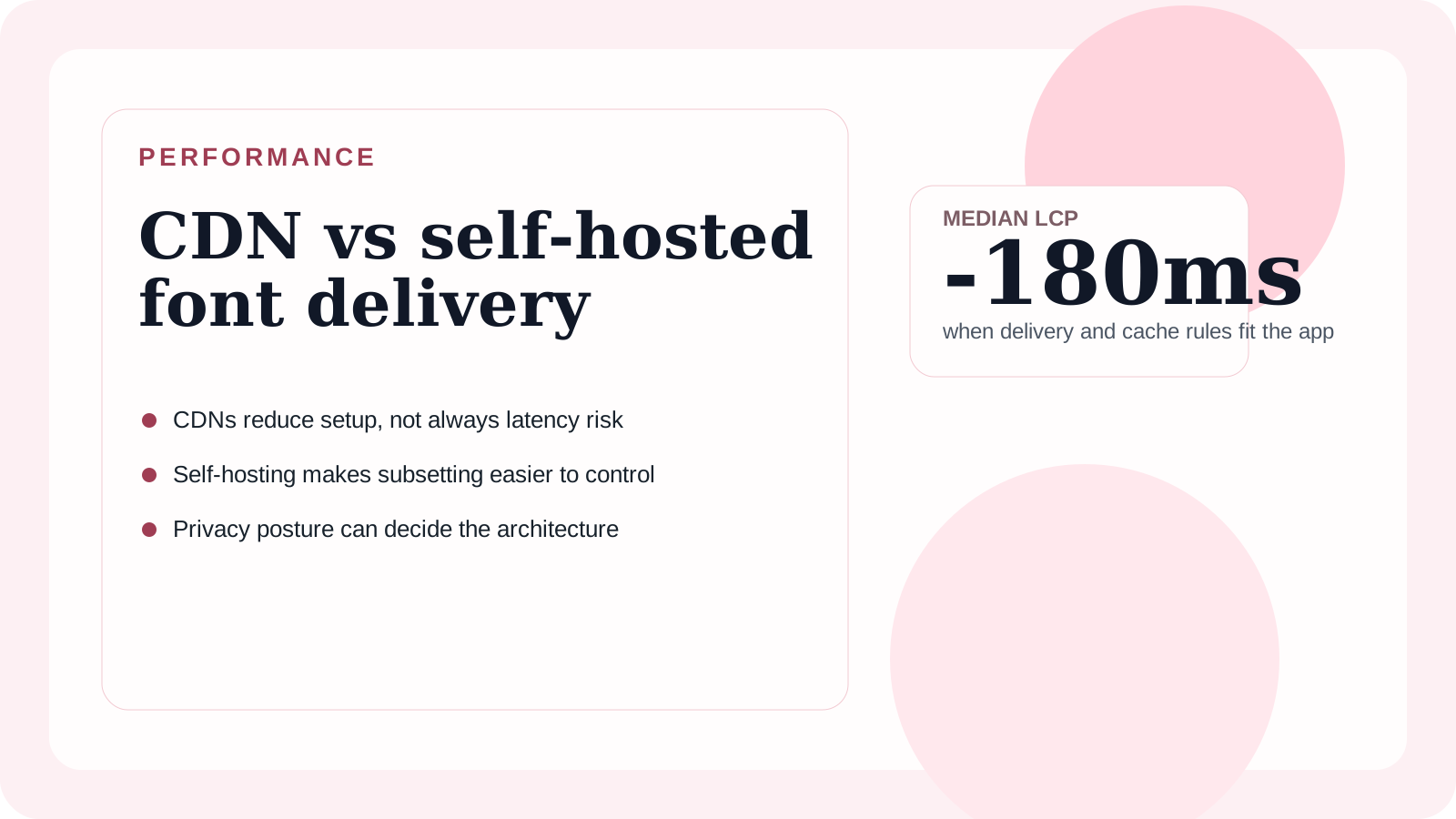
There is no permanent winner between CDN and self-hosted fonts because the performance question is really an operational question. The right choice depends on how much control your team needs over caching, privacy, fallback behavior, and release timing.
When a CDN helps
Font CDNs reduce setup work and often provide mature caching behavior out of the box. For small teams or marketing sites, that convenience can be worth more than theoretical control. A good CDN also smooths over regional delivery and simplifies updates when the font catalog changes.
The downside is dependence. You inherit third-party latency, request negotiation you did not design, and a privacy footprint that may not fit stricter environments. If a product team needs predictable asset behavior during experimentation, those tradeoffs become harder to justify.
When self-hosting wins
| Criterion | CDN delivery | Self-hosted delivery |
|---|---|---|
| Setup effort | Low | Moderate |
| Cache control | Limited | Full control |
| Privacy posture | Shared with third party | Fully first-party |
| Release coordination | Separate from app deploys | Aligned with app deploys |
| Fine-grained subsetting | Usually limited | Strong if your pipeline supports it |
Self-hosting is strongest when performance work is ongoing. If you are subsetting fonts, testing unicode ranges, or pairing font delivery with route-level budgets, owning the assets makes iteration easier.
Questions teams should ask
How often do you change font files? Do you operate in regions where third-party latency is unpredictable? Are privacy reviews already forcing you to minimize external calls? Can your build pipeline reliably subset and version font assets without breaking fallback behavior? These questions shape the decision more than vague claims about one approach being "faster."
In many mature apps, the answer becomes hybrid: self-host brand-critical families and use a CDN only for low-risk editorial or experimental surfaces. That lets teams keep core experiences predictable while avoiding unnecessary tooling overhead for everything else.
Recommendation
Default to self-hosting when typography is part of the product experience, not just the marketing shell. Use a CDN when convenience and catalog access outweigh the cost of less control. The best choice is the one your team can monitor, debug, and evolve without surprises.
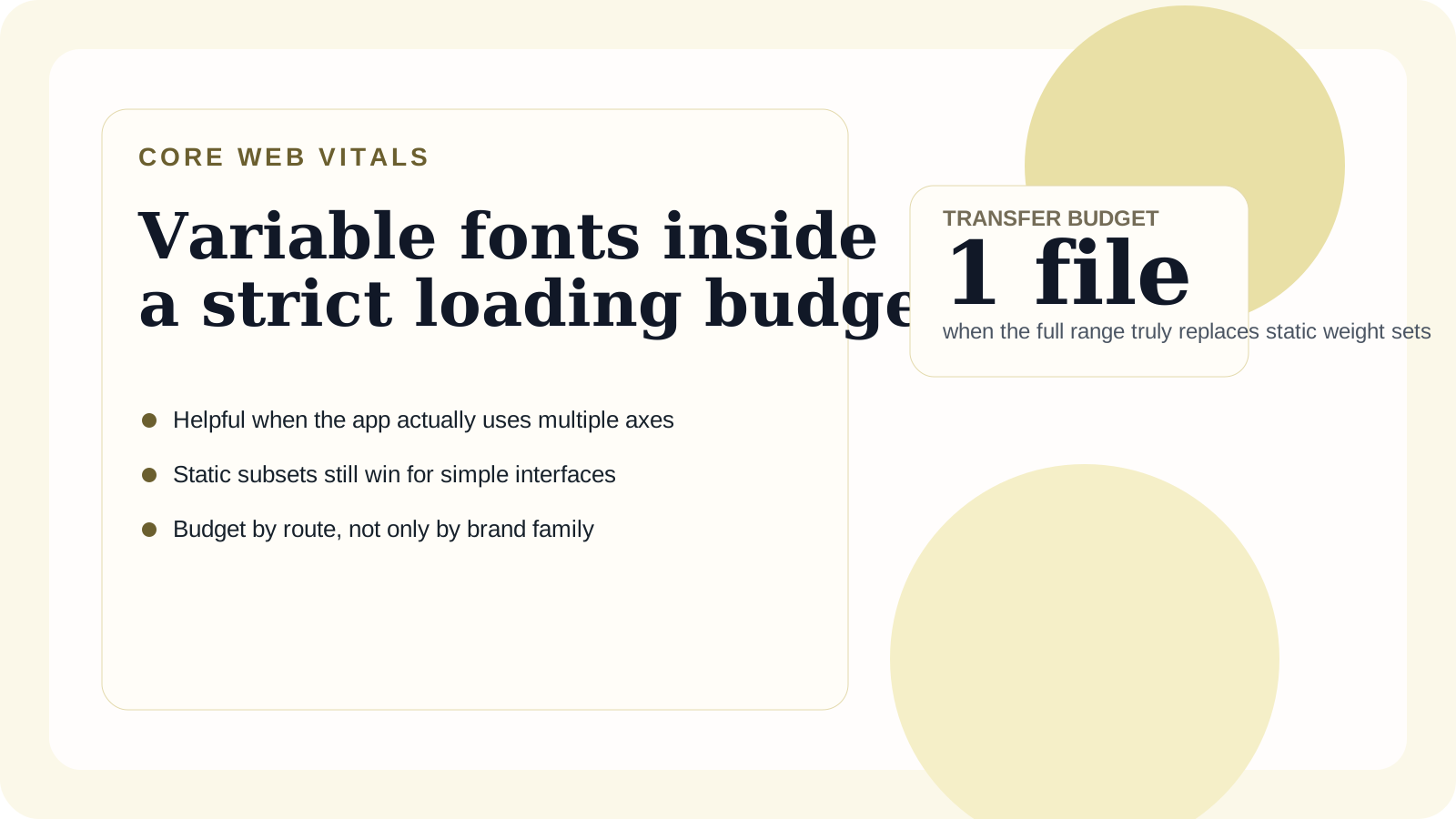
If you are actively tightening a delivery budget, continue with performance font loading budget because the hosting choice matters most when it connects to measurable weight and rendering targets.